


Course: Global Cardio-Oncology Certification Training
In partnership with the Global Cancer Consortium

Course: Global Cardio-Oncology Certification Training
In partnership with the Global Cancer Consortium
This program is designed for both individual and institutional use.
Institutions may utilize the program with fellows or trainees.
Cancer and cardiovascular disease (CVD) are interlinked through common risk factors, co-occurrence in an aging population, and the deleterious effects of cancer treatment on cardiovascular (CV) health.
The relationship between cancer and CVD is bidirectional. Well-known risk factors for CVD, such as tobacco, obesity, physical inactivity, poor nutrition, diabetes, alcohol, hypertension, and hyperlipidemia, are also risk factors for many cancers.
Cancer treatment has been associated with a wide spectrum of short- and long-term cardiotoxic effects, with cardiomyopathy resulting from anthracyclines as a classic example. An explosion of novel cancer therapies has revolutionized the field and dramatically altered cancer prognosis.
Read More
However, these therapies have introduced unexpected CV complications beyond cardiomyopathy. Ironically, increases in CV morbidity and mortality now threaten to offset the advances in cancer-related survival. Moreover, the epidemiological impact of cancer therapy-related cardiotoxicity is growing, and the number of cancer survivors and aging patients with various CV comorbidities at risk for cancer is increasing.
Oncologists are thus increasingly collaborating with CV specialists to risk-stratify and to address myriad comorbidities and the adverse effects of novel cancer therapeutics, the mechanisms of which are often poorly understood. CV specialists need to have a thorough understanding of the complex pathophysiology that links cancer and CVD and the mechanisms of novel chemotherapeutic agents. Familiarity with the modalities to risk-stratify and detect early CV effects of cancer treatment is among the skills required for optimal care of the cancer patient. With growing recognition of the importance and complexity of the relationship among cancer, its treatment, and CVD, CV professionals need exposure to the field of cancer therapeutics and its effect on CV health.
Cardio-oncology (or onco-cardiology) has emerged as a field of expertise that aims to usher patients safely through cancer therapy and into survivorship while tempering CVD and minimizing risks of cancer therapy, as competing causes of morbidity and mortality. It has become increasingly clear that the involvement of a cardio-oncologist enables the cancer treatment team to provide the most effective cancer therapies while minimizing CV toxicity and improving the health of long-term survivors of cancer. With growing clinical demand, there will be an increasing number of cardio- oncology training programs, located mainly at tertiary/quaternary referral centers.
Program Co-Directors
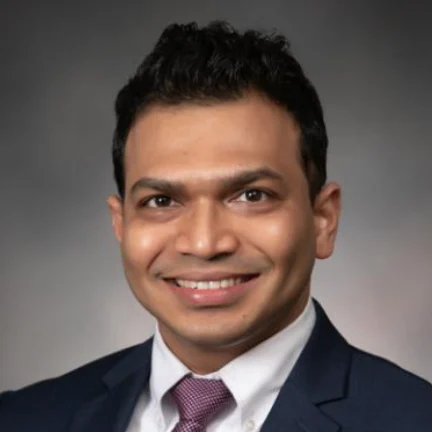
Amit Arbune, MD, MHA, FACC
Assistant Professor
UT Southestern
Medical Center
Dallas, Texas, USA

Sarju Ganatra, MD, FACC
Cardio-Oncology Program at Lahey Hospital and Medical Center
Beth Israel Lahey Health
Burlington, Massachusetts, USA

Dipti Gupta, MD, MPH
Cardio-Oncology Clinical Research Fellowship Program Director
Memorial Sloan Kettering
Cancer Center (MSKCC),
New York City, New York, USA
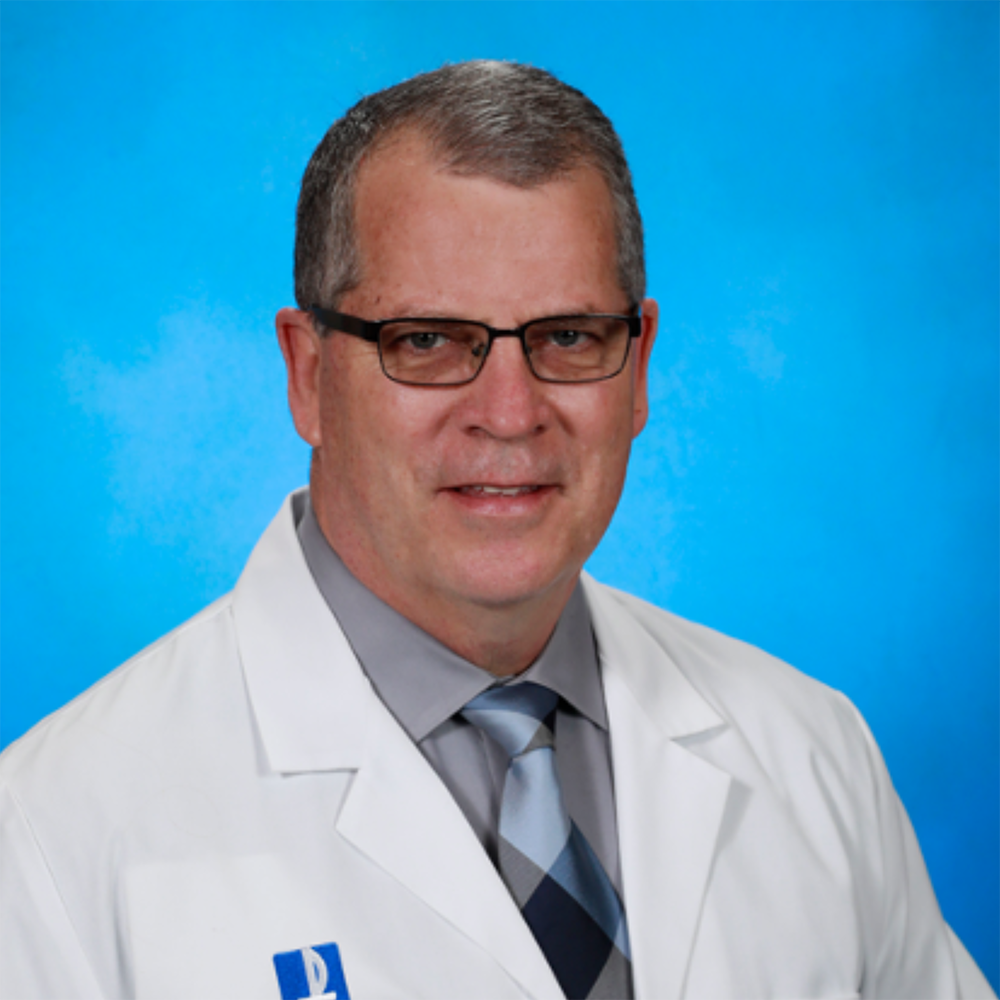
Daniel Lenihan, MD, FACC
Founder and Past President – International Cardio-Oncology Society (IC-OS)
Cape Girardeau,
Missouri, USA
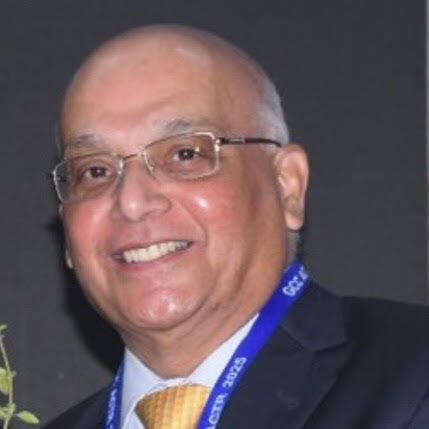
Vivek M. Rangnekar, MD
Professor and Alfred Cohen Endowed Chair
Founding Chair, Global Cancer Consortium
Associate Director, Markey Cancer Center
University of Kentucky
Lexington, Kentucky, USA
Curriculum Overview
There are three mandatory components and one optional component in this training program.
- MANDATORY DIDACTIC COMPONENT
The Global Cancer Consortium (GCC) in collaboration with The International Cardio-Oncology Society (IC-OS) will host the educational content on the GCC website.
The content will be available online so that the enrolled trainees may review it at their own convenience. The website will track their activity.
After completing the didactic component, the trainee will take the Competency Assessment Exams (100 questions, 70% passing score).
- MANDATORY CLINICAL CASE REVIEWS & PRESENTATIONS
Course faculty and trainees enrolled in the course will meet virtually, at least once every quarter, to present and discuss clinical cases and provide an opportunity for trainees to consult with the course directors.
These presentations will ensure patient privacy by removing all identifying information.
- MANDATORY CLINICAL COMPONENT
The time of clinical exposure for oncologists and cardiologists/ physicians is 6 months. Clinical exposure in cardio-oncology could occur simultaneously with the didactic component or after successful completion of the competency exams depending upon the requirements set by the participating institute.
For those enrolled in the Train-the-Trainer track, clinical exposure is not required. However, clinical competency needs to be demonstrated.
After successful completion of each mandatory component, trainees will be eligible to take the IC-OS Certification Exam.
Train-The-Trainer Track
Candidates will have a minimum experience of 2 years practicing cardio-oncology at a high-volume center and should be interested in serving as trainers for future trainees in this program.
Trainee Track
Candidates will be:
- established or in-training Cardiologists,
- established or in-training Hemato-Oncologists,
- established or in-training Medicine physicians, or
- established or in-training PharmDs.
Clinical exposure is available at the institute of the trainee if appropriate arrangements can be made. An opportunity to gain national (in the trainee’s home country) and international exposure (mainly in USA) may also be available, but cannot be guaranteed. This will depend on the availability of the position, availability of funding and ability to obtain the visa.
- OPTIONAL RESEARCH COMPONENT
Interested candidates may be provided mentorship and involved in research projects.
Graduation Criteria
The criteria for Graduation from the Program include:
- View all uploaded online video lectures in full.
- Successful completion of a test that is based primarily, but not exclusively, on the online video lectures. Achieve a minimum score of 70% to pass the test. You may retake the test multiple times if necessary to pass.
- Interact with the assigned mentor at least once in every two months.
- Attend at least 75% of case presentations every year and present at least one case.
For those enrolled in the Train-the-Trainer track:
In addition to the 4 requirements mentioned above, there is one more test based on sample cases involving multistep clinical case scenarios.
The candidate will be provided a minimum of 10 multistep cases, requiring 80% correct responses for passing.
Graduation Criteria
- Individual: $300 USD ($200 USD for Low-Middle Income Countries)
- Institution: $1000 USD (up to 5 trainees)
- The fee for the IC-OS Certification Exam is included in the cost.